The Irish Harp: Discovering the Magic Behind Celtic Harp Music
- Aug 4
- 3 min read
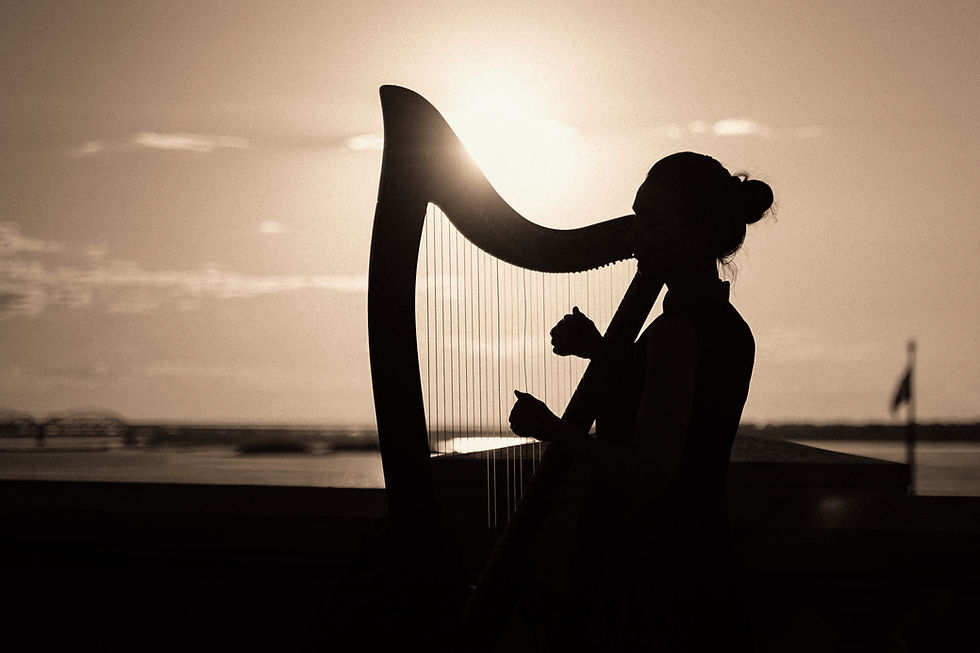
When people think about Celtic music, one of the first instruments that often comes to mind is the Irish harp.
At Fées de Lune, discovering the Irish harp opened the door to a completely new musical world for us — one filled with emotion, imagination, softness, and atmosphere.
There is something truly special about this instrument. The moment you hear its strings, it can instantly create a feeling of calm, mystery, or even nostalgia. Some melodies feel peaceful and comforting, while others transport us into a world inspired by legends, nature, and old stories.
Irish Harp and Celtic Harp: Are They the Same?
Many people wonder if the terms Irish harp and Celtic harp mean the same thing — and most of the time, they do.
“Celtic harp” is generally the broader term used to describe smaller lever harps connected to Celtic regions such as Ireland, Scotland, Wales, and Brittany. These harps are lighter and more intimate in sound than large orchestral pedal harps.
The term “Irish harp” is often used more specifically when talking about Irish musical traditions and the harp’s long cultural history in Ireland. Over time, the instrument became one of Ireland’s most recognized national symbols.
Today, however, many musicians and listeners use both terms interchangeably.
Irish Harp vs. Pedal Harp
One thing that surprises many people is that Irish harps are quite different from classical pedal harps seen in orchestras.
A concert pedal harp is much larger and usually has 47 strings along with seven pedals used to change keys while playing. Its sound is rich and powerful, designed for large concert halls and orchestral music.
Irish harps, on the other hand, are generally smaller, lighter, and more intimate in sound. Instead of pedals, they often use small levers attached to the strings to raise notes when needed.
At Fées de Lune, we each play different types of Celtic harps that bring their own unique colors to our music.
Anic Proulx plays a 34-string Celtic harp, which allows for a wider range of harmonies and melodies. Marylène Messierplays a 21-string troubadour harp, a smaller harp with a delicate and beautifully intimate sound.
We love blending both harps together because each instrument creates a different texture and atmosphere.
Learning the Irish Harp
Learning Irish harp music was a very different experience from playing other instruments.
The flowing hand movements, finger coordination, and sensitivity required by the instrument create a completely different relationship with music. Unlike piano, where notes are laid out horizontally, the harp requires a more visual and tactile approach.
At first, even simple melodies can feel surprisingly challenging. But over time, the instrument begins to feel natural, and that is when its expressive possibilities truly start to open up.
One thing we especially love is how emotional the instrument feels to play. Tiny changes in touch, rhythm, or dynamics can completely transform the atmosphere of a piece.
A Musical World Filled With Atmosphere

What drew us toward Irish harp music the most was the atmosphere it creates.
Its sound can feel soft and calming one moment, then mysterious, cinematic, warm, or deeply emotional the next. Combined with flute, tin whistle, cello, and harmonized voices, it creates the dreamy and immersive atmosphere that slowly became part of the identity of Fées de Lune.
Some melodies instantly bring images of forests, rivers, misty landscapes, candlelight, or ancient legends.
That is one of the things we love most about this music — its ability to awaken the imagination and transport listeners somewhere beyond everyday life
Have you ever listened to Irish harp music live?

Comments